

Hospital Privacy Curtains and Patient Satisfaction
Patient Experience Begins with Privacy

Every patient expects a degree of privacy when receiving medical care. Whether they are discussing symptoms with a physician, recovering after surgery or undergoing a routine examination, feeling exposed can quickly undermine confidence in the care being provided.
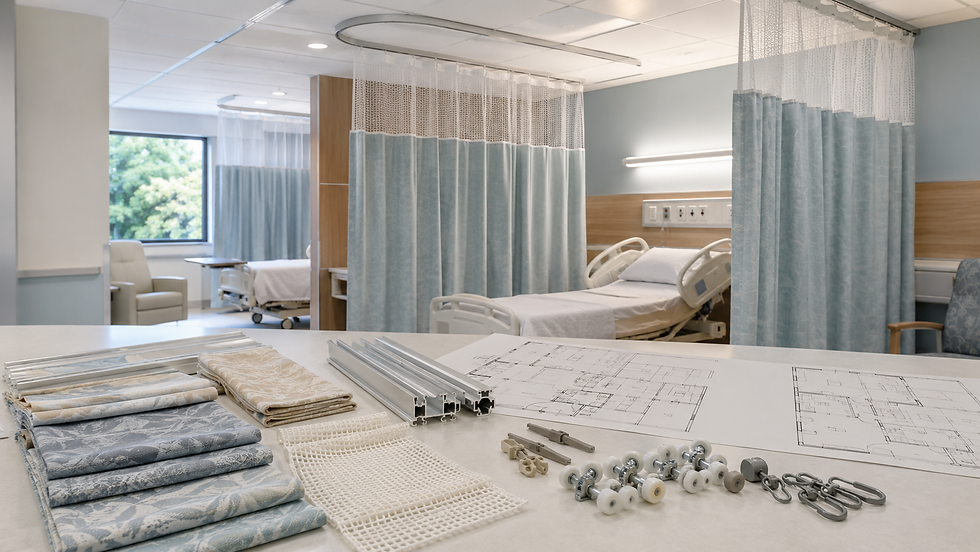
Hospital privacy curtains create a simple physical boundary that helps patients feel more comfortable during vulnerable moments. Although they cannot eliminate every distraction found in a busy healthcare environment, they provide an immediate sense of personal space that patients value.
For healthcare facilities focused on improving patient satisfaction scores, privacy should never be treated as a secondary consideration.
Privacy Supports Patient Dignity
Many hospital patients spend hours or even days in shared accommodation. During that time they may undergo examinations, receive treatment, change clothing or discuss sensitive medical information.
Well-positioned hospital privacy curtains help protect patient dignity by reducing unnecessary exposure to neighbouring patients, visitors and passing staff.
That feeling of privacy often encourages more open communication between patients and healthcare professionals. Patients who feel comfortable are generally more willing to ask questions, discuss concerns and participate in decisions about their treatment.
Small improvements in the environment can positively influence the overall care experience.
A Better Environment Reduces Anxiety
Hospitals are naturally busy places.
Medical equipment generates noise, staff move continuously between patients and clinical activity rarely stops completely. Privacy curtains help soften some of that intensity by creating individual treatment spaces within larger wards.
Although curtains do not provide complete sound insulation, they establish a clear personal area that feels calmer and less exposed.
For patients already experiencing anxiety, pain or uncertainty, that additional sense of separation can make the environment feel less overwhelming.
Supporting Better Conversations
Healthcare depends on communication.
Doctors, nurses and therapists regularly discuss personal information with patients throughout the day. While dedicated consultation rooms are available for some conversations, many discussions take place at the bedside.
Hospital privacy curtains provide a more appropriate setting for these conversations by reducing visual distractions and helping patients feel their confidentiality is being respected.
Patients often judge the quality of care not only by clinical treatment but also by how respectfully that treatment is delivered.
Privacy and Infection Control Work Together
Hospital privacy curtains also contribute to wider operational goals.
Modern disposable curtain systems allow facilities to maintain privacy while supporting infection prevention programmes. Quick replacement reduces handling, simplifies maintenance and helps ensure patient areas remain clean and ready for use.
Many healthcare providers now combine disposable hospital privacy curtains with scheduled replacement programmes to support both patient safety and operational efficiency.
More information is available here:
Curtain Quality Influences Patient Perception
Patients notice their surroundings.
Curtains that are stained, damaged, difficult to close or hanging unevenly can create a poor first impression, even when clinical care is excellent.
Clean, well-maintained hospital privacy curtains communicate professionalism and attention to detail. They suggest that the wider environment is cared for properly, helping to reinforce confidence in the facility.
Routine inspection and timely replacement protect both the appearance of the department and the patient experience.
The Track System Matters Too
Even high-quality curtains perform poorly if the track system does not operate smoothly.
Curtains that stick, leave gaps or require excessive effort to move create frustration for both staff and patients. During examinations or treatment, delays caused by faulty tracks interrupt workflow and reduce the sense of privacy the curtain is intended to provide.
A reliable curtain track system allows staff to create private spaces quickly while maintaining efficient patient care.
Further information about hospital curtain systems is available at:
Facilities Management Has a Direct Impact
Patient satisfaction is often associated with clinical care, though facilities management plays a significant role behind the scenes.
Well-maintained curtain systems demonstrate attention to cleanliness, privacy and patient comfort. Regular inspections, planned replacement programmes and prompt maintenance all contribute to an environment that patients perceive positively.
These operational standards also reduce unexpected maintenance issues that can disrupt busy clinical departments.
Supporting Long-Term Patient Satisfaction
Improving patient satisfaction rarely depends on one major change. It is usually the result of many smaller decisions that shape the patient experience from admission through to discharge.
Hospital privacy curtains help create dignity, encourage better communication, support infection prevention and improve the overall appearance of patient care areas. When combined with dependable track systems and planned maintenance, they become an important part of delivering a positive healthcare experience.
Healthcare facilities investing in high-quality hospital privacy curtains are investing not only in infrastructure but also in patient confidence, comfort and satisfaction.



Comments