

Medical Curtain Track Systems: Surface Mounted vs Ceiling Mounted
Why the Medical Curtain Track System Matters
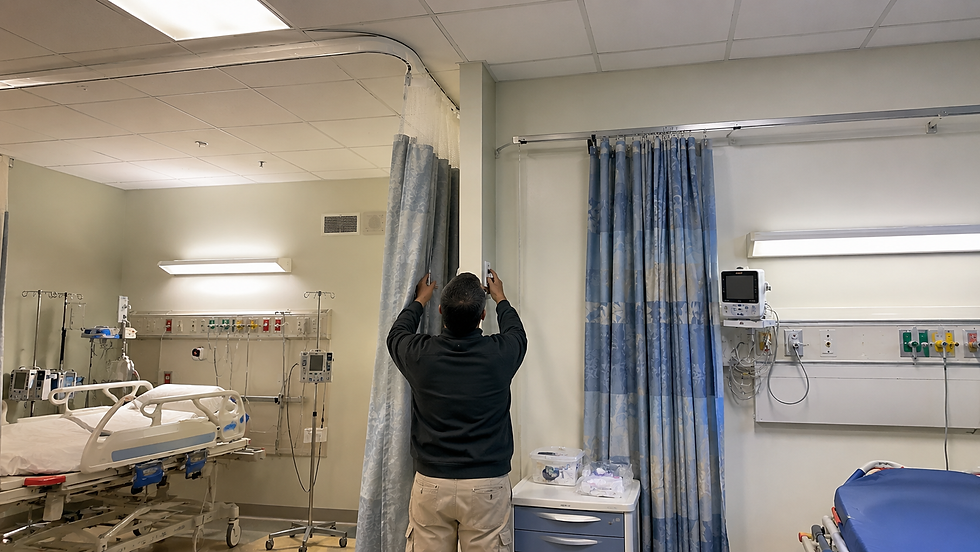
Privacy curtains receive most of the attention during procurement, but the track system determines how well those curtains perform over the next ten or twenty years.
Every day, clinical staff open and close curtains hundreds of times across patient wards, emergency departments and treatment rooms. A poorly specified track quickly becomes difficult to operate, slows patient care and increases maintenance costs.
When planning a new installation or refurbishment, facilities managers should evaluate the complete curtain system rather than viewing the track as a secondary component.
What Is a Ceiling Mounted Medical Curtain Track System?
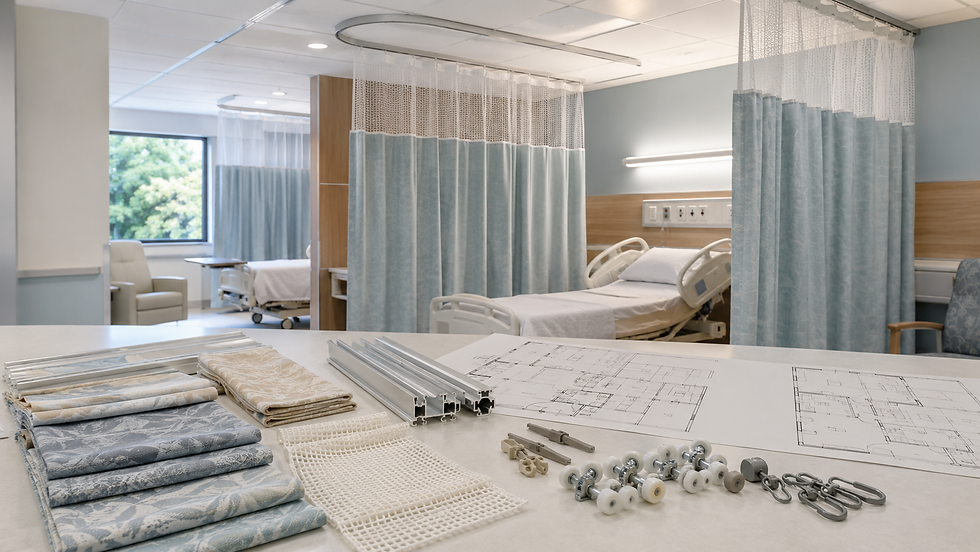
A ceiling mounted medical curtain track system is fixed directly to the ceiling structure, allowing curtains to run smoothly around patient beds without additional wall supports.
This is the most common arrangement found in modern hospitals because it provides maximum flexibility when creating private treatment spaces. Curved track layouts can be designed around individual beds, allowing staff to fully enclose patients during examinations or procedures.
Ceiling mounted systems also leave floor space completely clear, making cleaning easier while reducing obstacles around beds, wheelchairs and mobile medical equipment.
For new hospital construction, ceiling mounted tracks are often the preferred specification because they offer the greatest flexibility for future room layouts.
When Surface Mounted Systems Are the Better Choice
Surface mounted systems are attached to walls or structural surfaces instead of being suspended directly from the ceiling.
Although they are less common in acute-care wards, they remain an excellent solution in certain environments.
Older healthcare buildings sometimes have ceiling structures that make direct ceiling installation impractical or prohibitively expensive. Surface mounted systems can provide a reliable alternative without major structural alterations.
They are also suitable for consultation rooms, treatment rooms and smaller clinical spaces where curtain movement is relatively straightforward.
The right solution depends on the building, not simply the curtain.
Installation Considerations
Installation begins long before the first section of track is fixed into place.
Facilities teams should consider ceiling construction, room dimensions, mechanical services, lighting, sprinkler systems and future maintenance access before specifying a medical curtain track system.
A ceiling crowded with ventilation ducting or medical gas services may influence track layout. Likewise, older buildings may require additional reinforcement before suspended systems can be installed safely.
Planning these details early avoids expensive alterations later in the project.
Patient Privacy Should Drive the Decision
The primary purpose of any medical curtain track system is to support patient privacy.
Ceiling mounted tracks generally allow curtains to wrap more completely around treatment spaces, reducing gaps that can occur with simpler wall-mounted arrangements.
In busy emergency departments and recovery units, this additional coverage helps staff conduct examinations while protecting patient dignity.
The track should allow curtains to move smoothly without sticking or leaving partially enclosed spaces.
More information about available curtain systems can be found at:
Maintenance Requirements Differ
Long-term maintenance costs are often overlooked during procurement.
Ceiling mounted systems usually contain more carriers and curved sections, though modern designs require very little routine maintenance when installed correctly.
Surface mounted systems may be simpler mechanically, but brackets, fixings and support arms should still be inspected regularly for movement or wear.
Regardless of installation type, facilities managers should include curtain tracks within planned preventative maintenance schedules rather than waiting until faults develop.
Small problems such as worn glides or damaged carriers are inexpensive to resolve if identified early.
Supporting Infection Control
Track systems also contribute to infection prevention.
Smooth-running tracks allow curtains to be replaced quickly, reducing the time staff spend handling contaminated fabrics. Modern quick-change carriers further simplify replacement procedures, particularly where disposable privacy curtains are used.
Open floor areas created by ceiling mounted systems also make routine cleaning easier around patient beds and equipment.
Hospitals using disposable curtain systems often benefit from combining them with track systems designed specifically for rapid curtain changes.
Relevant product information is available here:
Planning for Future Expansion
Healthcare facilities rarely remain unchanged.
Departments expand, beds move, treatment spaces are reconfigured and patient numbers fluctuate throughout the life of a building.
A flexible medical curtain track system makes these changes easier to accommodate.
Modular ceiling mounted systems can often be extended or adapted without replacing the complete installation. This allows facilities managers to respond to changing clinical requirements while protecting previous investment.
Thinking beyond today's room layout often results in better long-term value.
Which System Is Right for Your Facility?
There is no universal answer.
Ceiling mounted medical curtain track systems are generally the preferred choice for new hospitals, larger patient wards and departments where flexibility, privacy and efficient cleaning are priorities.
Surface mounted systems continue to offer an effective solution in refurbishment projects, smaller treatment areas and buildings where structural limitations make ceiling installation less practical.
The best decision comes from understanding how the department operates every day, how frequently curtains are used, and what maintenance resources are available.
Selecting the correct medical curtain track system helps improve workflow, supports patient privacy and reduces long-term operating costs while providing dependable performance for years to come.



Comments