

Avoid 4 Critical Medical Curtain Installation Mistakes

Improper medical curtain installation compromises infection control and facility safety. This guide identifies technical errors in track alignment and clearance heights that lead to regulatory citations. Addressing these specific procedural oversights ensures long term durability and environmental hygiene.
Summary
Miscalculating ceiling clearance disrupts airflow and fire suppression systems.
Using incompatible track hardware causes premature fabric wear and mechanical failure.
Neglecting the precise placement of snap buttons leads to privacy gaps.
Failing to account for weight load limits results in structural damage to drop ceilings.
Ceiling Clearance and Fire Code Violations
Standard NFPA 13 requirements mandate specific clearances between the top of a privacy curtain and the ceiling. Many facility teams install tracks too high. This error obstructs the lateral discharge of fire sprinklers. A curtain mesh must allow at least 70 percent open space if the fabric extends into the upper 18 inches of the room. Failure to verify local fire marshal interpretations before drilling into the deck leads to expensive retrofits. Staff often focus on patient privacy at the expense of life safety codes. Maintaining a 12 to 18 inch gap from the ceiling prevents smoke pocketing. It also ensures that HVAC systems circulate air effectively within the patient bay.
Incompatible Track Hardware and Glide Friction
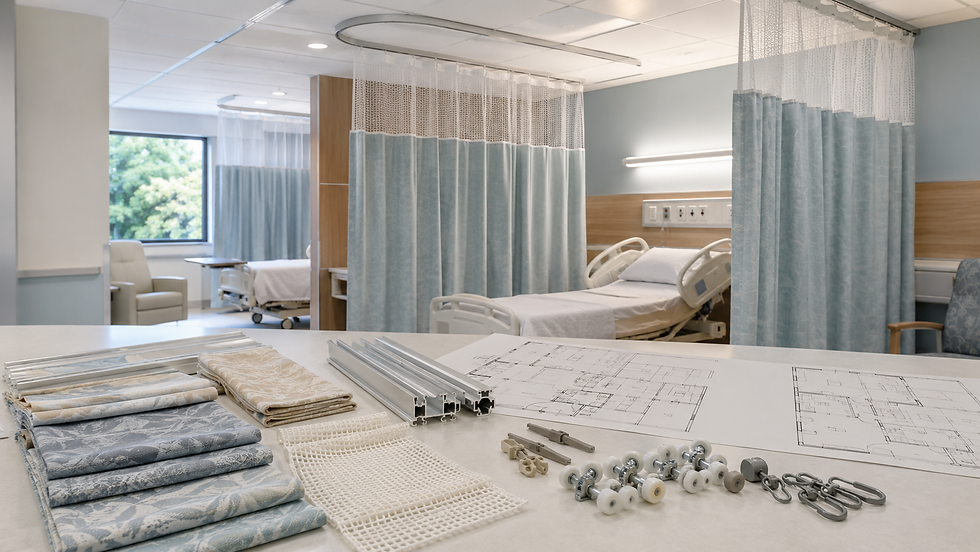
Procurement departments sometimes mix track brands and carrier components to save on immediate costs. This decision creates long term operational friction. Aluminum tracks require specific nylon or ball-bearing carriers designed for that exact profile. Using mismatched glides causes the curtain to snag. Nurses and environmental services staff then pull harder on the fabric to close the gap. This repetitive stress tears the grommets. It also pulls the track away from the ceiling grid. High-quality installations prioritize a silent, smooth glide. Selecting heavy-duty rollers with stainless steel hooks prevents the oxidation seen with cheaper plated alternatives. Lubricating tracks with silicone spray might seem like a solution for poor fits but it actually attracts dust and pathogens. Stick to matched systems from a single manufacturer to ensure the warranty remains valid.
Privacy Gaps and Incorrect Snap Alignment
Curtain panels must overlap sufficiently to prevent visual gaps. A frequent error involves measuring the track length and ordering the exact same width of fabric. Medical curtains require a 10 to 15 percent fullness factor to hang correctly. Without this extra material, the curtain remains taut when closed. This tension exposes the patient to the hallway. Furthermore, the placement of snap buttons or magnets on the leading edge matters. If the snaps do not align with the wall-side stationary track, the curtain will drift open. This creates a HIPAA violation regarding patient dignity. Installers should mark the wall attachment points only after the track is fully secured and the curtain is hung. This ensures the fabric reaches the wall without straining the ceiling anchors.
Ignoring Weight Load Limits on Suspended Ceilings
Hospital cubicle curtains are heavy. Antimicrobial treated fabrics and blackout linings add significant mass to the track system. Many installers anchor tracks directly to the T-bar grid of a suspended ceiling without additional support. This is a structural mistake. Over time, the constant movement of the curtains causes the grid to warp. In extreme cases, the entire track can collapse. Secure the track to the building structure above the drop ceiling using threaded rods or aircraft cable. This transfers the weight to the joists. It also prevents the ceiling tiles from cracking or shifting. A stable track reduces the noise generated during curtain operation. It also allows the facility to switch to heavier disposable curtains or lead-lined panels if the room function changes in the future.
Standardizing Antimicrobial Fabric Selection
Selecting the wrong textile for a specific clinical area undermines infection control protocols. Cubicle curtains in high-traffic zones like the Emergency Department require frequent laundering or replacement. If a facility installs standard decorative fabric in a trauma bay, the material will degrade under harsh chemical disinfectants. Choosing disposable cubicle curtains for high-turnover environments reduces the labor burden on environmental services. These panels offer a practical alternative to traditional textiles that harbor Methicillin-resistant Staphylococcus aureus (MRSA). For long-term care wings, cubicle curtain tracks should support durable, flame-retardant polyester that survives industrial washing temperatures. Facilities must match the fabric durability to the specific cleaning cycle of each department.
Hem Height and Floor Contamination
Curtains hanging too low touch the floor and collect contaminants. Curtains hanging too high fail to provide adequate acoustic or visual privacy. The industry standard suggests a 6 to 9 inch clearance from the finished floor. This gap allows floor cleaning equipment to pass under the curtain without splashing the fabric with dirty water or wax. Installers often forget to account for the "drop" of the hooks and carriers when measuring. They measure from the track to the floor and order fabric based on that number. The resulting curtain drags on the ground. This creates a trip hazard for patients and staff. It also turns the bottom hem into a vector for healthcare-associated infections. Accurate measurements must start from the bottom of the carrier hook to the desired hem line.
Improper Anchor Selection for Drywall and Plaster
When tracks must be mounted to walls rather than ceilings, anchor choice determines the system's lifespan. Plastic expansion anchors often fail under the lateral pull of a moving curtain. Toggle bolts provide better security by spreading the load behind the wallboard. However, the best practice involves blocking. During renovation, installers should place wood or metal backing behind the drywall where the track will sit. This provides a solid substrate for wood screws. If blocking is unavailable, heavy-duty zinc alloy anchors offer the best remaining grip. A loose wall mount leads to sagging tracks which eventually prevents the carriers from moving at all. Checking the pull-out strength of the chosen fastener prevents these mid-shift equipment failures.
Failure to Account for Obstructions Patient rooms are crowded with equipment. Wall-mounted monitors, oxygen flowmeters, and IV poles often sit in the path of the curtain track. A common installation mistake is following a straight line without considering the swing radius of these medical devices. Tracks should be positioned to allow the curtain to clear all wall-mounted equipment by at least 3 inches. This prevents the fabric from snagging on sharp metal edges or knocking over sensitive monitors. Using hospital privacy curtains with custom bends or radius curves allows the track to navigate around fixed obstructions. Planning the layout on the floor with tape before drilling the ceiling ensures the curtain can move freely during a code or emergency procedure.
Impact on Operational Workflow
Installation errors dictate how efficiently a nurse can respond to a patient. A snagging curtain or a jammed track wastes seconds during a crisis. Procurement officers should view medical curtains as a functional tool rather than a decor item. Correct installation reduces the frequency of maintenance requests and extends the life of the fabric. It ensures that the facility remains in compliance with Joint Commission standards. Each error in track placement or hardware selection carries a cost. These costs manifest as damaged ceilings, ripped fabrics, and potential fines. Professional installation according to manufacturer specifications protects the facility's investment and the safety of everyone inside the building.



Comments