

Guide to Medical Curtain Track Systems and Hardware

Primary Hardware Configurations
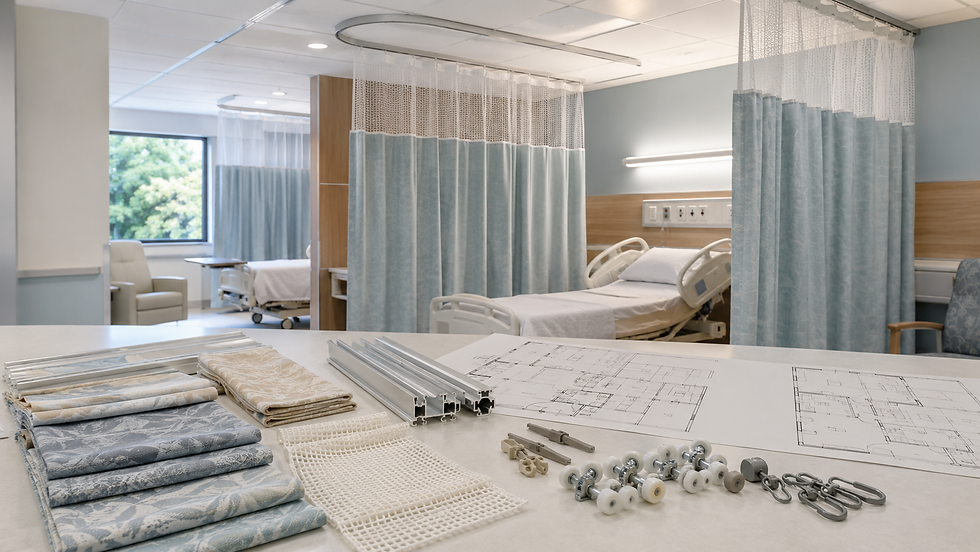
Hospital cubicle tracks generally fall into two categories: surface mounted and suspended. Surface mounted tracks attach directly to the structural ceiling or a drop ceiling grid. These systems offer maximum stability because the track has continuous support along its entire length. Facilities with standard 8 to 9 foot ceilings typically favor this approach.
Suspended systems utilize hangers or pedestals to drop the track to a functional height. High ceilings, common in older surgical wings or modern lobby areas, necessitate these supports to keep curtains reachable for staff. Suspended tracks also facilitate better air circulation. Smoke detectors and fire sprinklers function more effectively when gaps exist between the track and the ceiling. This configuration prevents the curtain from acting as a barrier to heat rising toward sensors.
Material Composition and Durability
Aluminum remains the industry standard for track extrusions. Extruded aluminum alloy 6063-T5 provides the necessary rigidity to prevent sagging over time. Anodized finishes or powder coatings protect the metal from the harsh chemical cleaners used during terminal cleaning. Steel tracks exist but often suffer from corrosion in humid environments or when exposed to bleach based disinfectants.
Gliders and carriers represent the most frequent point of failure. Nylon or high density polyethylene wheels offer low friction movement. Constant yanking by staff and patients puts immense stress on these components. Carriers with axle based wheels outperform basic friction slides. They reduce noise, which contributes to higher HCAHPS scores by maintaining a quieter environment for patient recovery.
Structural Requirements for Installation
The ceiling must support the weight of the track, the curtains, and the force of a person pulling on the fabric. In drywall ceilings, installers should secure tracks into metal or wood studs. Toggle bolts provide a secondary option when studs are unavailable, though they offer less pull out resistance.
Drop ceilings require specialized hardware. Attaching a track only to the thin aluminum T-grid of a suspended ceiling leads to structural failure. Use grid clips designed to distribute weight across the grid or install support backing above the tiles. Heavy duty installations often involve threaded rods extended from the structural deck above the drop ceiling. This ensures the curtain system remains independent of the fragile ceiling tile framework.
Bend Radius and Room Layout
Standard track sections come in straight lengths, but patient bays often require L-shaped or U-shaped configurations. Most manufacturers provide pre-bent curves at 45 degree or 90 degree angles. A standard 12 inch radius curve allows for fluid movement of the curtain around corners. Tight radii can cause carriers to bind, leading to hardware damage and frustrated clinical staff.
Custom bends are necessary for dialysis bays or multi bed wards with irregular footprints. On-site bending tools exist, but factory-made curves ensure a more consistent profile. Inconsistent bends create gaps in the track channel where rollers can catch. This interruption in movement increases the likelihood of staff pulling harder, eventually loosening the ceiling mounts.
Internal Hardware Components
Every track system requires end caps and pull outs. End caps prevent carriers from sliding out of the channel. Pull outs, or gate assemblies, allow maintenance teams to add or remove curtains without dismantling the entire track. This feature speeds up the process of swapping soiled curtains for clean ones.
Internal splices join straight sections of track. A poorly aligned splice creates a bump that damages rollers. High quality systems use internal alignment pins to ensure the transition between two track pieces is perfectly level. If a facility notices curtains "catching" at specific intervals, the splice alignment is the first place to inspect.
Privacy and Infection Control Standards
The primary function of the hardware is to support curtains that meet NFPA 701 fire safety standards. Tracks must sit at a distance from walls that ensures full coverage. A gap of two inches between the track end and the wall prevents light leaks and maintains patient dignity.
Infection control teams often prefer track systems with minimal grooves or recessed channels where dust and pathogens can collect. Antimicrobial coatings on the track itself are available, though regular mechanical cleaning remains the most effective defense. Designers must ensure the track layout does not interfere with the path of overhead patient lifts. When these systems intersect, specialized gate hardware or bypass tracks allow both the lift and the privacy curtain to function without conflict.
Maintenance and Operational Life
Routine inspections prevent small hardware issues from becoming major safety hazards. Loose screws in the ceiling mount can lead to the entire track falling. Maintenance crews should check for bent track channels and cracked carriers annually. Lubrication is rarely required for modern nylon rollers and can actually attract dust, leading to more friction over time. If a track is sticking, the solution is usually cleaning the internal channel or replacing worn carriers rather than applying oil.
Cost considerations should focus on the total cost of ownership. Low grade hardware requires frequent replacement and increases the labor hours spent on repairs. Standardizing on a single track profile across a facility simplifies the inventory of spare parts. It also ensures that curtains with specific hook types fit every room in the building.
Impact on Clinical Workflow
Nurses and technicians move curtains hundreds of times per week. A system that moves with minimal effort reduces the risk of repetitive motion injuries for staff. Smooth hardware also prevents the "stuck curtain" scenario during emergencies. In a code blue situation, every second matters. A curtain that glides back instantly allows the crash cart and medical team to access the patient without obstruction.
Relevant Solutions
Facility directors looking for specific components can explore Cubicle Track Hardware to find compatible carriers and end caps. For new constructions, reviewing Cubicle Track Systems provides a breakdown of different mounting options. If a project requires specific dimensions, the Curtain Track Customization section details how to order tailored lengths and bends.
Structural Load Testing
Before finalizing an installation, facility managers should verify the load capacity of the chosen hardware. While a standard privacy curtain is lightweight, a wet curtain or a person leaning on the fabric for support adds significant weight. Standard hospital tracks should support a minimum of 25 pounds per linear foot. Exceeding this limit without proper structural backing risks ceiling damage.
Securing the track to the building’s primary structure via unistrut or threaded rods is the most reliable method for long term durability. This is particularly relevant in behavioral health units, where anti-ligature tracks are required. These specialized tracks use magnetic or break-away components that release the curtain if a specific weight threshold is met, preventing the hardware from being used as a ligature point.
Acoustic and Visual Considerations
Hardware choices impact the environment beyond physical privacy. Shiny, mill-finish aluminum can create glare under bright hospital lights. Matte or white powder-coated tracks blend into the ceiling, creating a less institutional feel. Regarding acoustics, the sound of metal hooks scraping against a metal track is jarring. Using quiet-glide carriers with plastic hooks or grommet-less curtains significantly lowers the ambient noise level in patient wards.
Future Proofing Facility Hardware
Technology in healthcare environments continues to change. Integrated systems now exist where tracks can incorporate lighting or IV bag supports. Choosing a heavy duty track profile during initial construction allows for these future upgrades without needing to replace the entire ceiling infrastructure. Modular designs allow for easy reconfiguration if a ward moves from a multi-occupancy layout to private rooms.
The hardware supporting medical curtains is as vital as the fabric itself. It dictates the ease of use for staff, the safety of the environment, and the frequency of maintenance interventions. By prioritizing high grade aluminum extrusions and smooth-rolling carrier systems, facility managers ensure a reliable foundation for patient privacy.



Comments